Andrea Benetti (born 1964) is an Italian visual artist whose research encompasses painting, drawing, photography, installation, and video art. He is internationally recognised for his distinctive dialogue between contemporary artistic expression and the symbolic origins of human creativity. His work is characterised by a sustained investigation into the relationship between image, memory, and the earliest forms of visual communication.
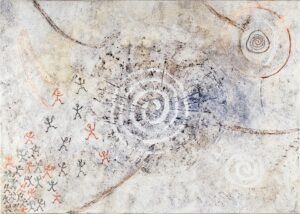
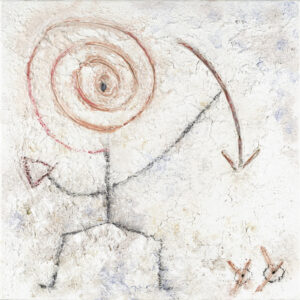
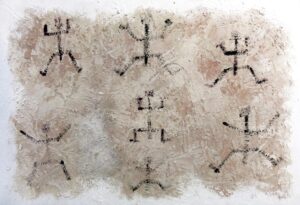
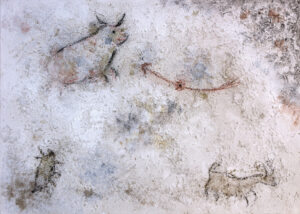
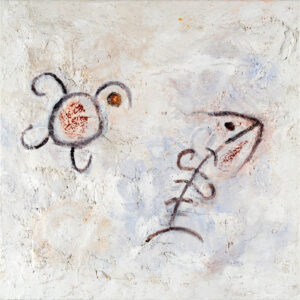
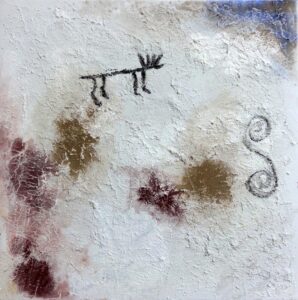
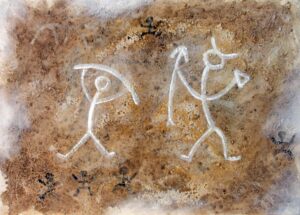
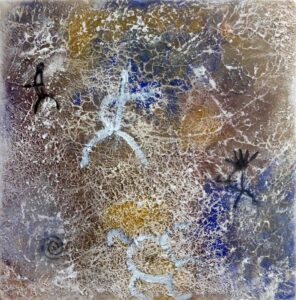
In 2006, Benetti formulated the Manifesto of Neo-Cave Art, a theoretical and artistic statement that reinterprets prehistoric artistic imagery through a contemporary lens. The Manifesto was officially presented in 2009 at the 53rd Venice Biennale, within the pavilion hosted by Ca’ Foscari University of Venice. Neo-Cave Art advocates a return to the primordial function of the image as a symbolic, ritual, and cognitive act, establishing a conceptual bridge between the earliest artistic gestures of humanity and contemporary visual language.
Benetti’s artistic research has attracted significant critical and academic attention. His works have been featured in major art encyclopaedias such as Treccani, De Agostini, and WikiArt, and his biographical profile on Wikipedia is currently available in forty-five languages, attesting to the international scope of his artistic presence. In 2020, he was awarded the Nettuno d’Oro, the highest and most historic cultural honour conferred by the city of Bologna, in recognition of his contribution to contemporary culture.
Alongside his artistic practice, Andrea Benetti has maintained a long-standing commitment to research and education. For over two decades, he has collaborated with numerous Italian and international universities, including the Universities of Bari, Bergamo, Bologna, Ferrara, Lecce, Messina, Roma Tre, Venice, and Johns Hopkins University. These collaborations have contributed to the inclusion of Neo-Cave Art within academic research programmes focused on contemporary artistic languages and their relationship with ancient iconography.
His works are held in important public and institutional collections worldwide, including those of the United Nations, the Quirinale, the Italian Chamber of Deputies, the Vatican, as well as various international museums and embassies. Through his artistic and theoretical practice, Benetti continues to develop a coherent and deeply symbolic body of work, positioning art as a space of reflection, continuity, and responsibility between past and present.
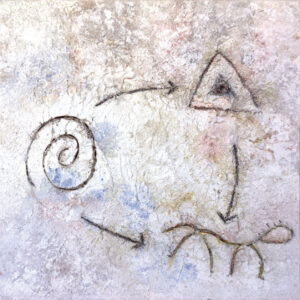
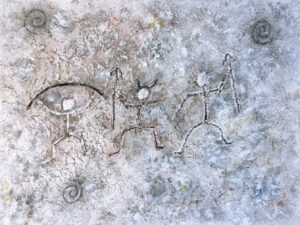
The works presented in the gallery are created using pigments dating back to the Paleolithic, discovered by the University of Ferrara during excavations at the Fumane Cave, together with five stones painted by a prehistoric man. A portion of these “colors” was entrusted to Benetti by the University of Ferrara for the creation of a cycle of works, developed under the supervision of the University of Bologna, Department of the Arts.