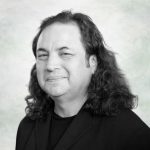
Guillermo Galindo (born 1960 in Mexico City, Mexico) is a Mexican composer, visual and sound artist, and performer whose work moves between experimental music, visual art, and performance, dissolving conventional boundaries between disciplines. His practice is marked by a strong conceptual and political dimension, addressing themes such as migration, human rights, environmental crisis, and the poetics of sound as a vehicle for memory and testimony.
Trained in Mexico and the United States, Galindo studied composition and electronic music at the Berklee College of Music and later at the Mills College, developing a language shaped by avant-garde experimentation, improvisation, and interdisciplinary research. He initially worked across orchestral and electroacoustic composition, progressively expanding his practice toward installation and performance-based environments.
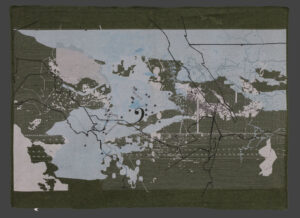
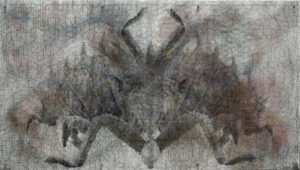
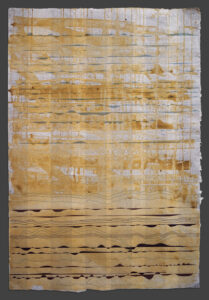
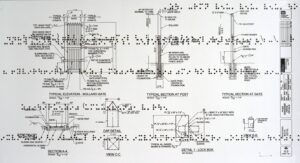
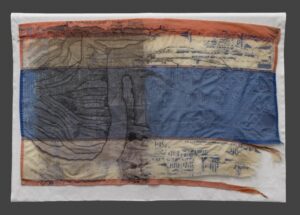
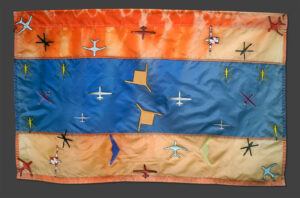
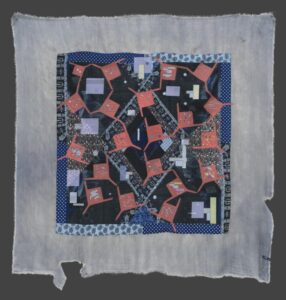
A defining aspect of his work is the transformation of found objects—often collected from sites of geopolitical tension—into sound-producing instruments and sculptural forms. This approach underpins major projects such as Border Cantos and Echo Exodus, presented at documenta 14, where personal belongings of migrants are reactivated as sonic devices, giving voice to otherwise silenced narratives. These works construct immersive environments that challenge conventional perceptions of time, space, and authorship.
Alongside his artistic production, Galindo has been actively engaged in performance art and collaborative practices, notably through his work with Guillermo Gómez-Peña’s collective La Pocha Nostra and as co-founder of the performance art festival POW! POW! . His work often incorporates guided improvisation, audience interaction, and site-specific intervention.
His works are held in major institutional collections, including LACMA, the National Gallery of Art, the de Young Museum, and the San Jose Museum of Art, and have received extensive international media coverage, including features in The New York Times, CNN, BBC, The Wall Street Journal, The New Republic and Art in America . Among his most significant recognitions is the Guggenheim Fellowship (2024). He currently teaches at the California College of the Arts, extending his research into experimental and socially engaged practices.
Through an interdisciplinary approach that integrates sound, materiality, and critical reflection, Galindo has established a practice that redefines the role of the artist in relation to global narratives and collective memory.