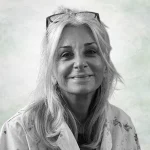
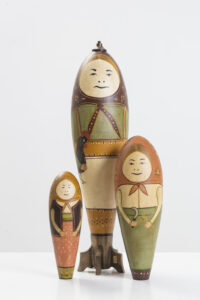
Katya Traboulsi (Beirut, 1960) is a Lebanese-Italian multimedia artist and one of the most significant figures in the contemporary Middle Eastern art scene. Her practice is rooted in a profound reflection on the impact of the Lebanese civil war and on collective memory. Working across painting, sculpture, and installation, her work is distinguished by its emotional intensity and bold use of color, through which she symbolically reinterprets elements tied to the history and identity of her country.
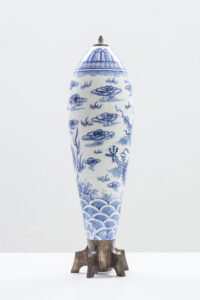
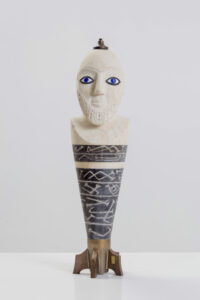
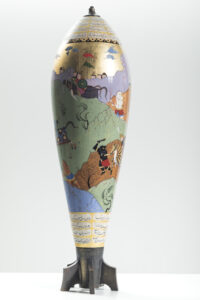
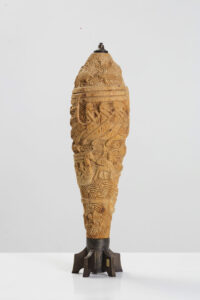
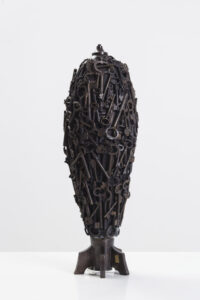
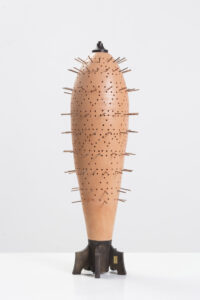
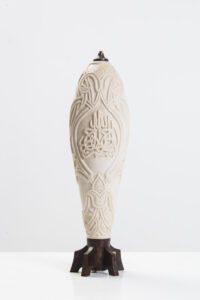
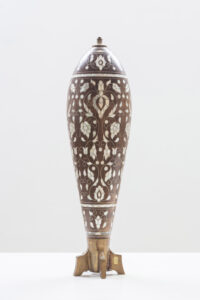
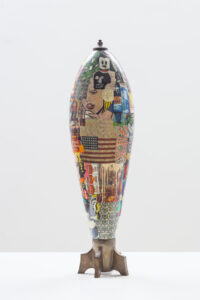
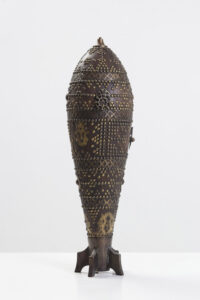
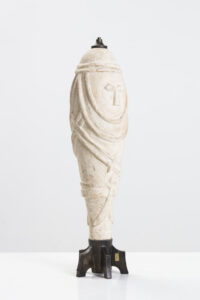
Active internationally since the 1990s, Traboulsi has developed an extensive exhibition career, with numerous solo shows in major galleries and institutions across the Middle East, Europe, and the United States. Among the most notable are her exhibitions at Saleh Barakat Gallery in Beirut, including Perpetual Identities (2018), a landmark project composed of 46 handcrafted replicas of Lebanese war shells transformed into ornate objects, and Rejaa Ya Mama (2023), dedicated to the popular visual culture of the city of Tripoli. Her work has also been presented in international contexts such as Paris, London, Dubai, New York, and Venice, consolidating a strong global presence within the contemporary art system.
Alongside her artistic production, she has developed significant editorial and curatorial projects. In 2011, she created Of Others, a body of work based on texts written by various authors and reinterpreted through painting, while in 2013 she curated and published Generation War, a project documenting the work of photojournalists during the Lebanese civil war, representing an important act of historical memory and political reflection.
Her exhibition activity also includes participation in major international group exhibitions and art fairs, such as Beirut Art Fair, Art Dubai, Art Paris, and the Armory Show in New York, as well as exhibitions at institutions including the Institut du Monde Arabe in Paris and the Middle East Institute in Washington, D.C.
Throughout her career, Traboulsi has lived and worked in various international contexts, including Dubai, while maintaining a strong connection to Beirut, where she is currently based. Through a practice that transforms symbols of destruction into forms of beauty and memory, her work stands as a powerful reflection on war, identity, and the possibility of visually reinterpreting contemporary history.